- Conservation Rising
- Posts
- Africa’s protected areas double down on circularity
Africa’s protected areas double down on circularity
Dear subscriber,
Parks in Africa are starting to take recycling seriously but questions arise as to whether the existing systems and regulations can support this effort.
Treezer Michelle Atieno - Editor
 | South Africa’s Kruger National Park is piloting a recycling initiative that includes the installation of clearly marked waste-separation bins across parts of the park. The move is part of a broader trend across Africa, where protected areas are going beyond waste collection to implement recycling and improved waste-management systems. |
As visitor numbers grow, parks are increasingly aware of the material footprint tourism brings, prompting efforts to redesign waste systems to balance conservation goals with the realities of modern travel and consumption.
Treating pollution prevention and resource recovery as integral to conservation, is helping parks protect biodiversity while managing the pressures of growing tourism.
Our take: Protected areas are left cleaning up waste from outside, with weak regional systems making the problem worse…Read more (2 min)
 | Conservation in Africa is increasingly being framed as an economic as well as ecological challenge. Wildlife-rich areas face pressure not because their value is unrecognised, but because it rarely translates into livelihoods, revenue or fiscal relevance at scale. Richard Vigne argues conservation must be economically sustainable. |
Richard Vigne is the Executive Director of the School of Wildlife Conservation at the African Leadership University. He writes: “The central issue is no longer whether nature should be protected, but whether it can compete, credibly and fairly, with other land uses in a fast-growing continent.”
He adds that aligning conservation with economic incentives can make wildlife protection sustainable for conservationists, communities, governments and investors alike.
Read the full opinion here…Read more (2 min)
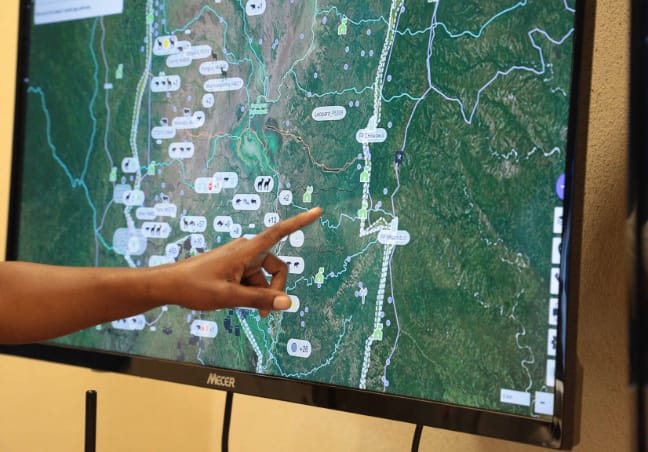 | This edition of our tech watch examines two new conservation technologies that illustrate how real-time monitoring is easing biodiversity management across Africa. Kenya is piloting both: high-resolution satellites to protect the critically endangered mountain bongo and a digital platform with sensors and AI to minimise human-wildlife conflict. |
Kenya deployed high-resolution satellite Earth observation technology on 16 January 2026 at the Mount Kenya Wildlife Conservancy in Nanyuki to monitor habitat changes affecting the critically endangered mountain bongo. The system is implemented by the Kenya Space Agency in partnership with Planet Labs.
The EarthRanger digital monitoring platform, deployed in Amboseli and other conservancies, reduces human-wildlife conflict by integrating different sensor networks and alerting rangers and communities on approaching wildlife.
Our take: Real-time monitoring allows rangers and conservationists to respond to biodiversity threats before they escalate…Read more (2 min)
____________________


Twinning initiative boosts cross-border wildlife conservation
Events
🗓️ Attend The Global Conservation Tech & Drone Forum in Kenya (Mar 2)
🗓️ Be at the Business of Conservation Conference in Kenya (Mar 4)
🗓️ Join the Biodiversity and Climate Change Conference in Nigeria (Mar 22)
Jobs
👷 Be the Wildlife and Habitat Conservation Scientist at Alignerr (SA)
👷 Join the UN as a Sustainable Tourism Specialist (Uganda)
👷 Be a Director, Protected Areas Finance Facility at CI (Kenya)
Various
🌳 South Africa rhino poaching falls by 16% in 2025
🌳 Ghana University launches ocean institute for marine research
🌳 Community-led rescues saves Kenya’s sea life
Seen on LinkedIn
Africa Geographic, says, “Africa’s wildlife decline is draining ecosystems of functional energy. Sub-Saharan Africa has lost over a third of its wildlife ecological power, with major declines notable outside protected areas.”_________________